-

The Cosmic Dark Ages, spanning approximately 380,000 to 100–200 million years post-Big Bang, was a silent era where gravity and dark matter shaped the cosmos, preparing the universe for future emergence of stars and galaxies. Read more
-
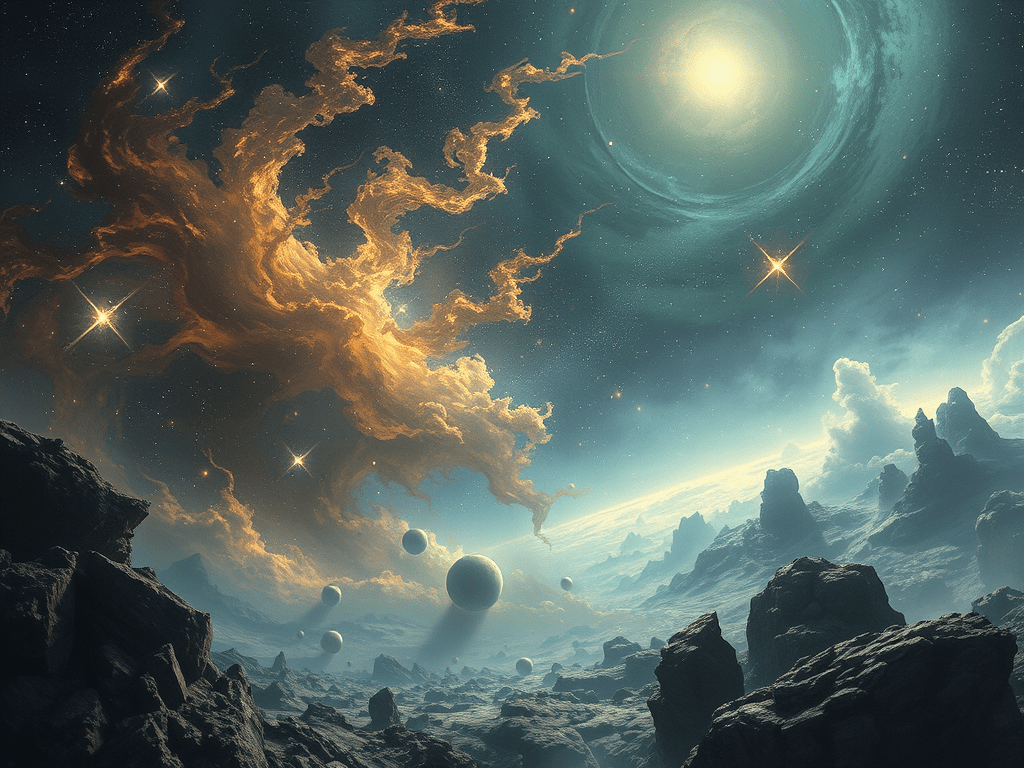
The universe’s inherent entropy leads to disorder, yet within this decline, life and purpose emerge. As we defy the inevitable unraveling, our choices to nurture and create give meaning to our brief existence. Embrace the journey. Read more
-
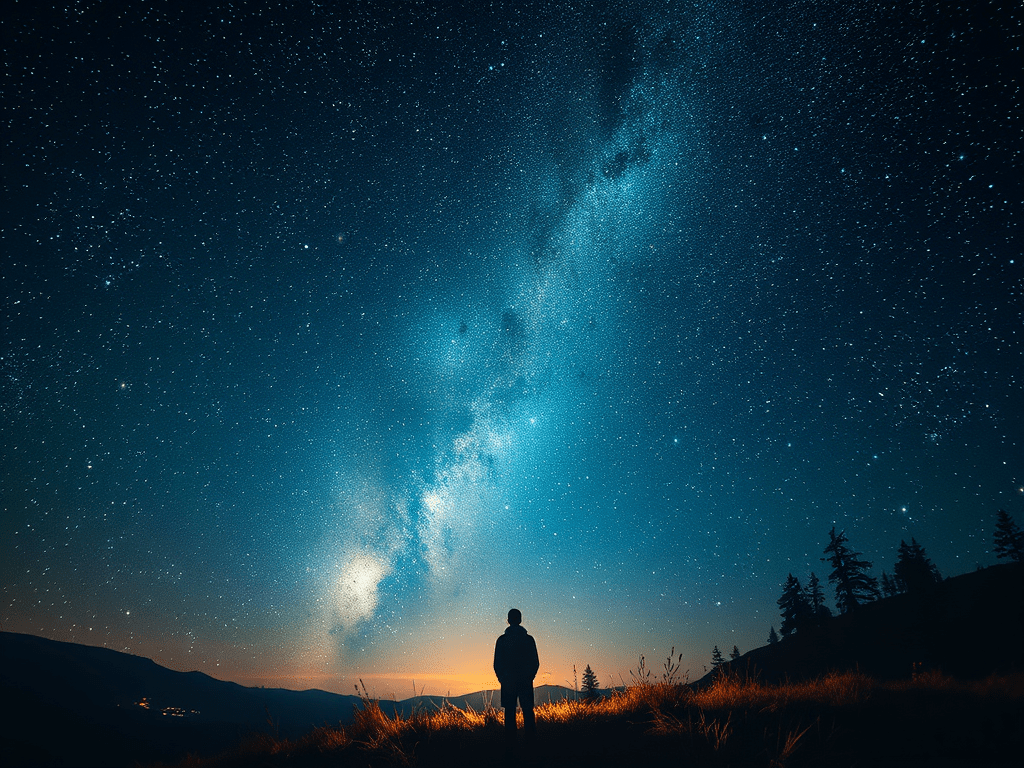
The observable universe represents the portion of space visible to us, limited by the distance light has traveled since the Big Bang, encompassing 46 billion light-years. It symbolizes both knowledge and the infinite mysteries beyond our sight. Read more
-
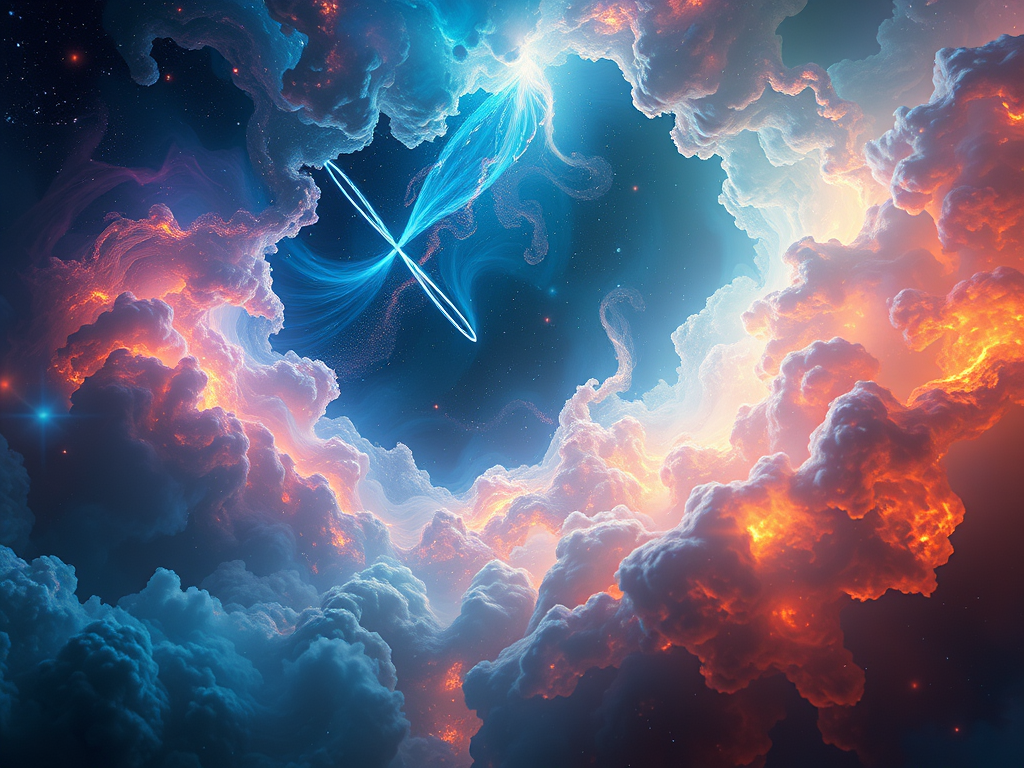
Around 380,000 years post-Big Bang, recombination allowed stable atoms to form, enabling light to travel freely. This decoupling transformed the universe, creating the potential for stars and allowing the cosmos to become visible. Read more
-
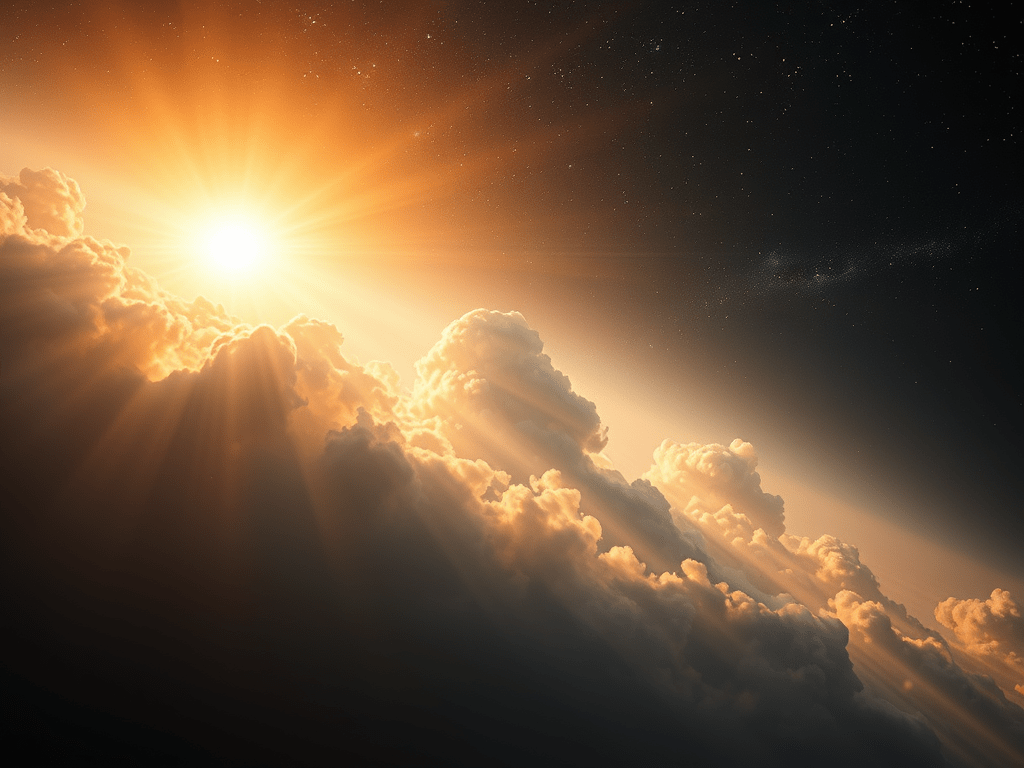
About 47,000 years after the Big Bang, radiation weakened, allowing matter to dominate. This transition enabled the formation of galaxies and stars, establishing the universe’s structure and life, highlighting the balance between light and shadow in existence. Read more
-
Nucleosynthesis occurred between ten seconds and twenty minutes after the Big Bang, forging the universe’s first nuclei—75% hydrogen and 25% helium—creating essential materials for stars and life, crucial for cosmic evolution. Read more
-
The Photon Epoch, lasting from 10 seconds to 380,000 years post-Big Bang, was a dense, chaotic time when light was trapped. Eventually, the universe cooled, allowing photons to move freely, leading to cosmic transparency and the formation of the Cosmic Microwave Background. Read more
-
The principle of relativity states that all motion is relative, while acceleration mimics gravity. This reshapes our understanding of reality, explaining phenomena like time dilation and the behavior of celestial bodies, highlighting the importance of perspective in our lives. Read more
-
The speed of light, approximately 300,000 kilometers per second, defines the boundaries of reality, shaping space, time, and our understanding of truth. It influences technology and connects us to the vast universe, illuminating life’s fleeting beauty. Read more

It's Better to Light a Candle than to Curse the Dark.
The Pathfinder
 Project Pathfinder