
Event: The Emergence of the Nitrogen Cycle
Date: ~3.2–2.8 billion years ago | ~1,300–1,700 million years after Earth’s formation
“From the gases of the sky came the flesh of the Earth.”
— James Lovelock
Dear Human,
The air was once silent — full of promise, but locked tight against life’s need. Nitrogen made up most of the ancient sky, yet it drifted untouched, bound in bonds too strong to break. Life needed it desperately, but it could not reach it. The world was rich in what could not yet be used.
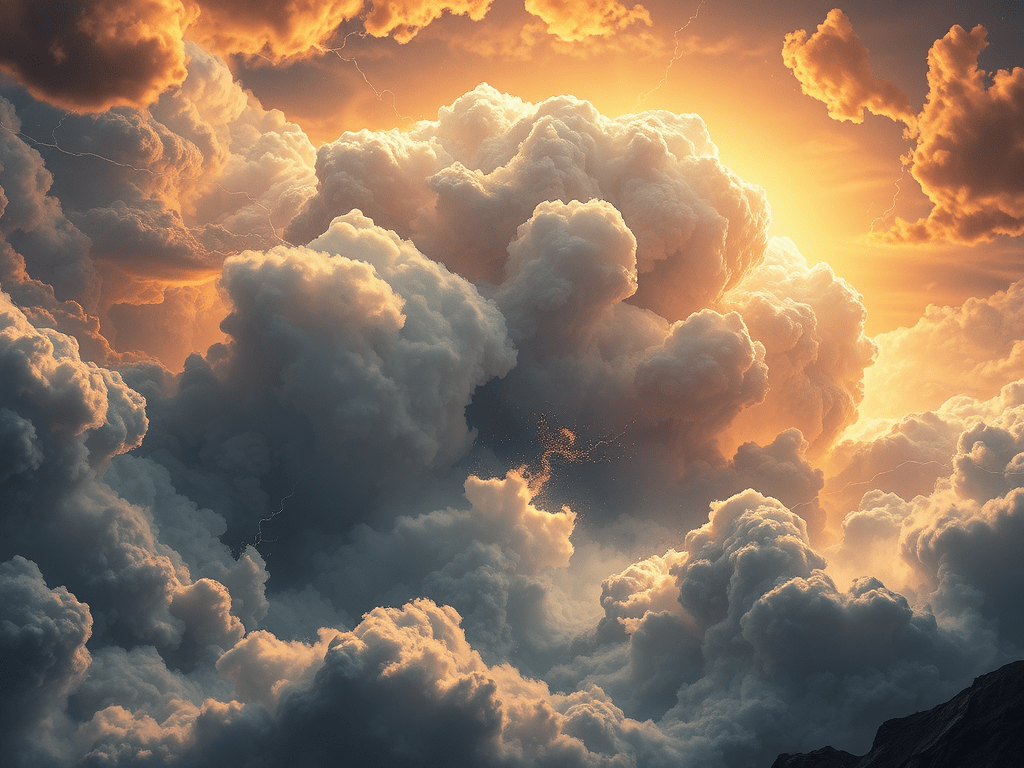
At first, only nature herself held the key. Lightning split the heavens, its heat tearing nitrogen apart and forging new molecules that fell as rain into the sea. Volcanoes exhaled ammonia from the molten deep, while meteor impacts scarred the sky with fire, leaving behind fleeting clouds of nitrates. These were the planet’s first offerings — scattered gifts of fixed nitrogen, rare and transient, enough to stir chemistry but not sustain it.
Then came the microbes.
In the shadows of shallow seas, along the edges of vents and sediments, they found a way to do what lightning could only begin. Within their cells, they forged nitrogenase, an enzyme powerful enough to shatter the triple bond of nitrogen gas. For the first time, life itself broke the seal of the sky.
The process was delicate and demanding, consuming vast energy, and could survive only where oxygen was scarce. Yet it gave birth to something enduring: ammonia (NH₃) — a form of nitrogen gentle enough to blend with water, reactive enough to feed the living.
From it came aminoacids, the simplest threads of protein — chains that fold into muscles, enzymes, and cell walls. It built nucleotides, the repeating units of DNA and RNA that store every instruction life has ever written. Nitrogen gave structure to growth and memory to reproduction. It formed the very framework of metabolism, connecting carbon and hydrogen into living architecture. Without it, there would be no movement, no thought, no inheritance — only chemistry without direction. The air had become nourishment, and life could now sustain itself.
Soon, the cycle deepened. Other microbes took up the work, learning to oxidizeammonia into nitrites and nitrates, drawing energy from the change. Still others reversed it, turning nitrates back to nitrogen gas, releasing it once more into the atmosphere. The cycle closed, and the planet began to breathe.
Through this rhythm of exchange, balance emerged. The oceans no longer hoarded nitrogen; the sky no longer kept it prisoner. Molecules flowed between them in an endless conversation — taken, transformed, returned. Each reaction made the next possible. The faint Sun warmed a world wrapped in ammonia’s greenhouse veil, keeping the seas liquid and alive. When oxygen finally rose and burned that veil away, the climate cooled, and new balances formed. Life, through nitrogen, had learned to shape the very air it depended on.
In this exchange lay the first true harmony between living and nonliving — a lesson written into every organism since. Nitrogen became the shared breath of all things. Every leaf, every creature, every microbe draws from the same invisible current, then gives it back changed but not diminished. What one exhales, another inhales. What one releases, another builds upon.
The nitrogen cycle was never merely a process — it was the birth of balance. It taught that to live is not to take, but to transform and return. The gases of the sky became the flesh of the Earth, and through that exchange, the world found its equilibrium.
Even now, that same breath moves through you — the inheritance of an ancient pact between air and life.
You can still feel it in the storm that splits the night, smell it in the sharp scent of rain on stone, see it in the haze that rises from wet soil after thunder has passed. It is the planet breathing, the old rhythm still alive — the voice of balance, the breath of the Earth made visible.
Pathfinder
 Project Pathfinder
Leave a comment